



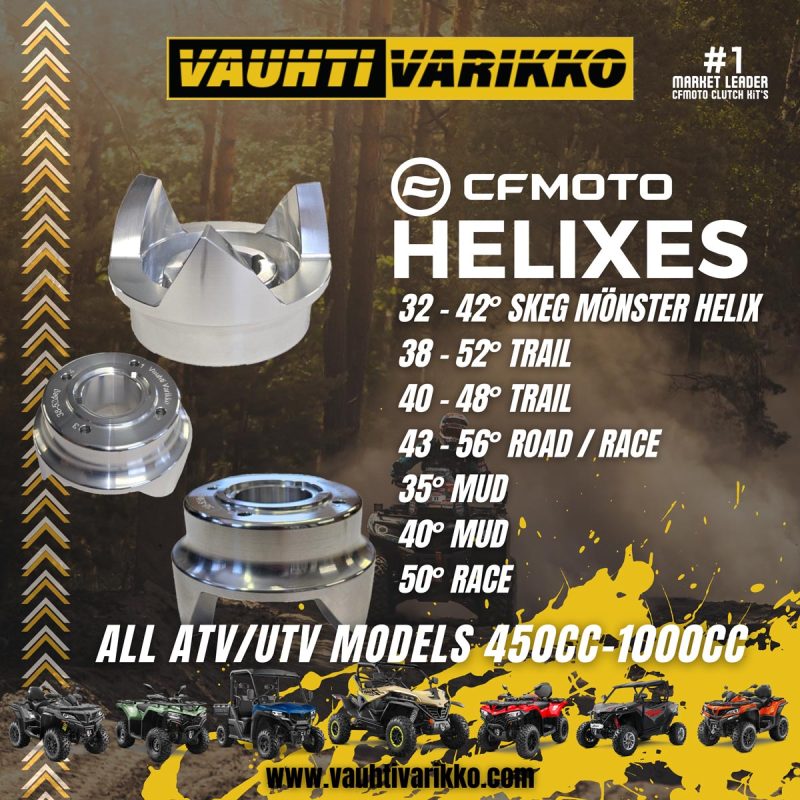
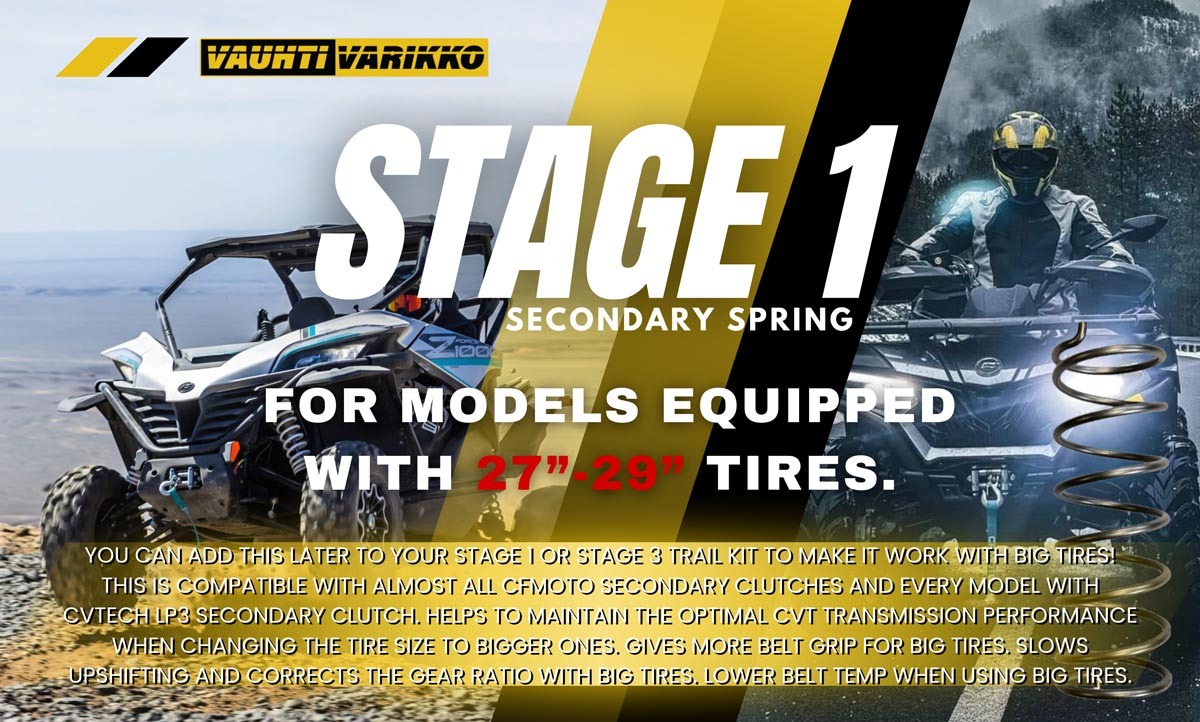

- For models equipped with 27”-29” wheels.
- You can add this later to your Stage 1 or Stage 3 Trail kit to make it work with big tires!
- This is compatible with almost all CFMOTO secondary clutches and every model with CVTech LP3 secondary clutch.
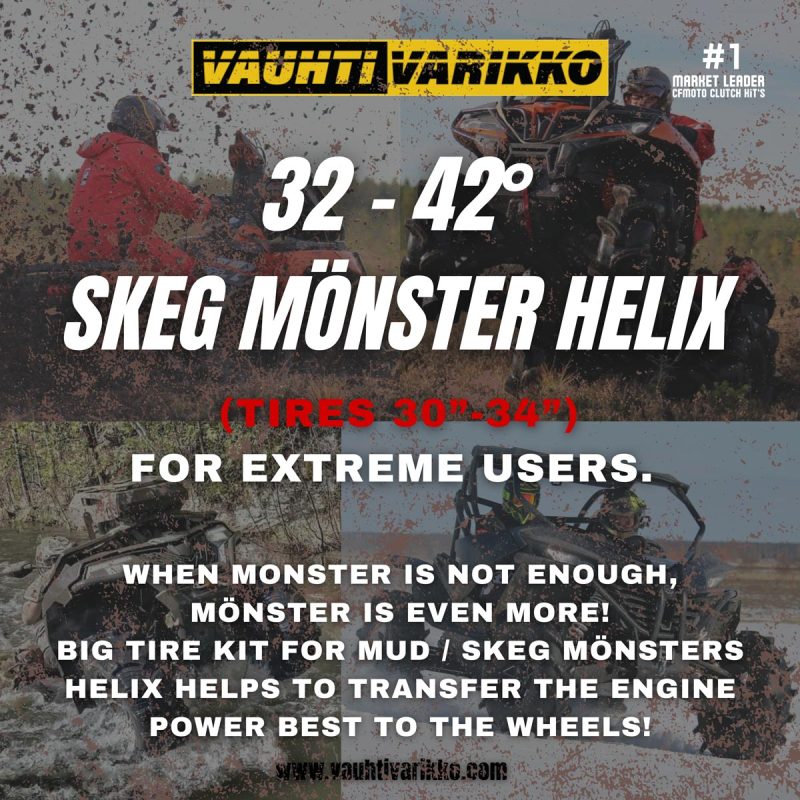
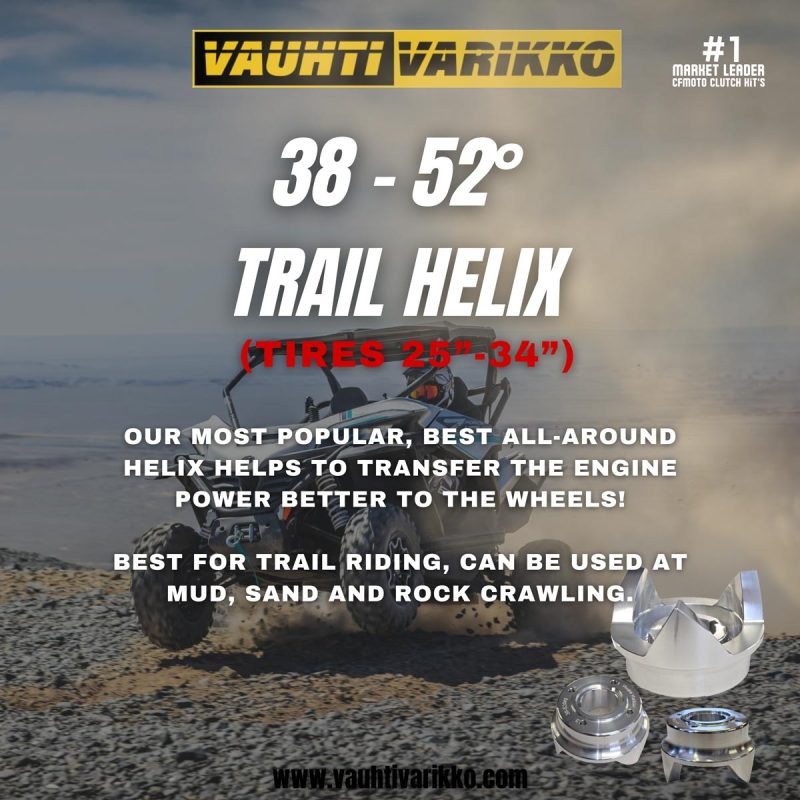
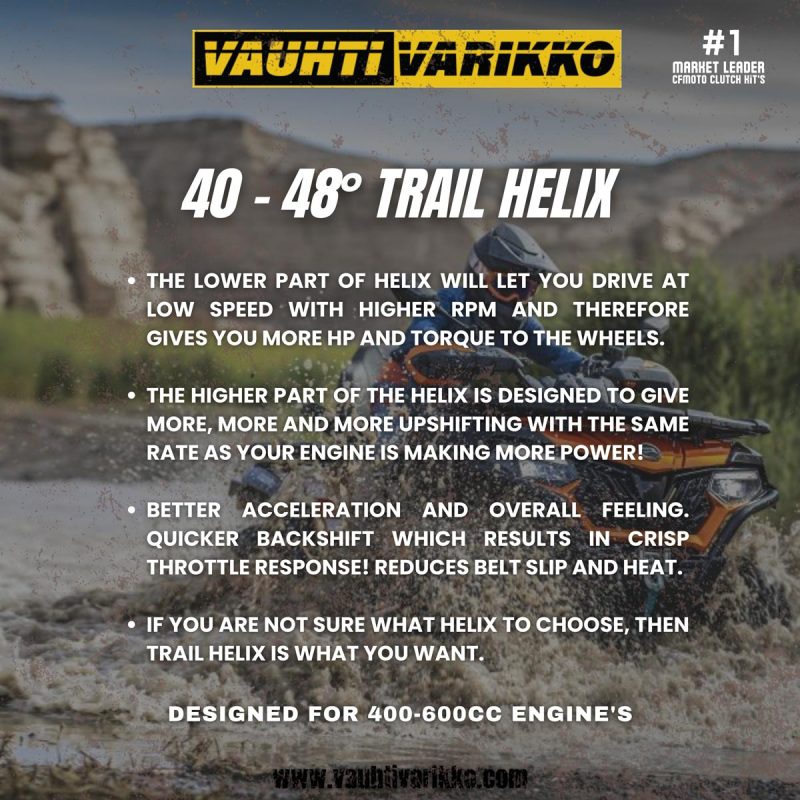
- Helps to maintain the optimal CVT transmission performance when changing the tire size to bigger ones.
- Gives more belt grip for big tires.
- Slows upshifting and corrects the gear ratio with big tires.
- Lower belt temp when using big tires.
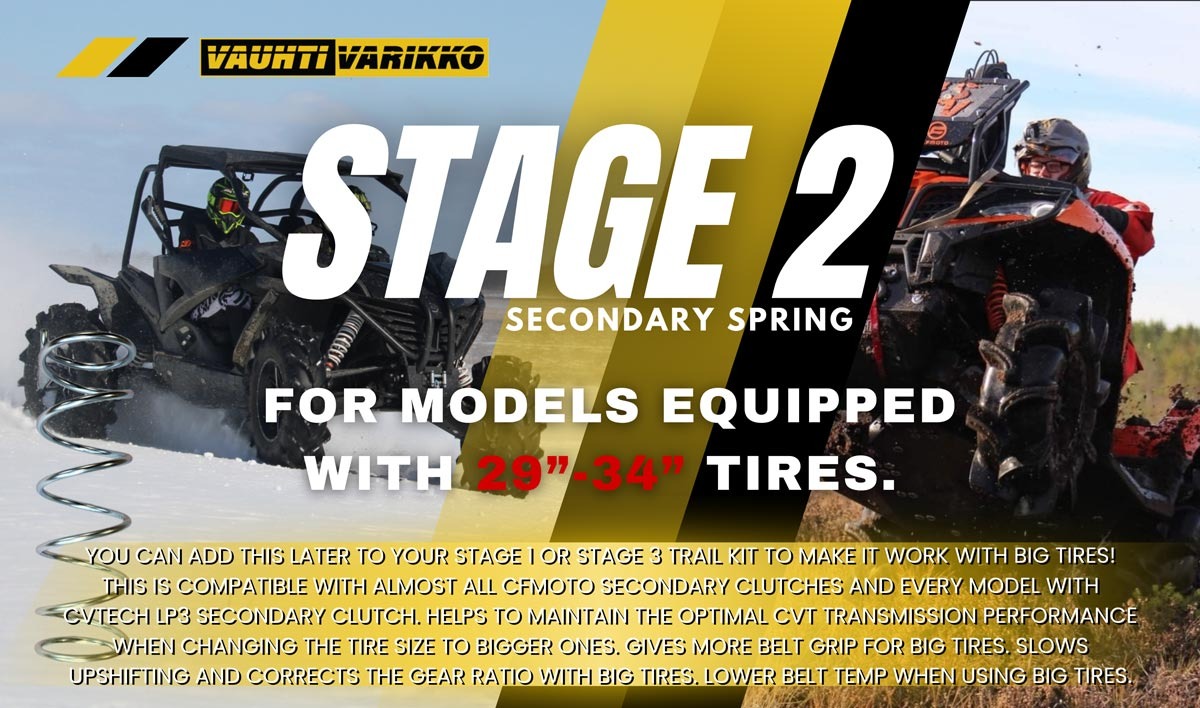
- For models equipped with 29”-34” wheels.
- You can add this later to your Stage 1 or Stage 3 Trail kit to make it work with big tires!
- This is compatible with almost all CFMOTO secondary clutches and every model with CVTech LP3 secondary clutch.
- Helps to maintain the optimal CVT transmission performance when changing the tire size to bigger ones.
- Gives more belt grip for big tires.
- Slows upshifting and corrects the gear ratio with big tires.
- Lower belt temp when using big tires.
- When installing larger diameter/heavy tires, it is recommended to change the CVT settings.
- If the CVT settings are not changed, the clutch will try to upshift too soon, placing a heavy load on the CVT belt, which could end up with broken belt in the worst-case scenario.
- If the CVT belt has broken for some reason, it has probably generated high heat in the CVT, which could also have effect on the clutch spring.
- A loose spring causes the clutch to engage too soon, and the transmission gearing changes too early, which usually can cause the new CVT belt to break.
- It’s recommended that the clutch’s springs should always be replaced in pairs with a new belt.